
You know that feeling of hearing about a movie and, while all of the elements of it sound good on paper, you still struggle to get excited about it? And then, when you finally see a trailer for it, you’re momentarily excited, only for the montage of images from the movie to fail to evoke any substantial enthusiasm for the movie? Well, welcome to my experience with Good Luck, Have Fun, Don’t Die! Even with all the promise of Sam Rockwell playing a time traveler trying to eradicate AI in a movie directed by Gore Verbinski, the movie only really delivers exactly what its on-paper description is and, while it keeps your interest, fails to be more than the sum of its parts.
In our present, a man claiming to be from the future (Rockwell) arrives in a diner to recruit people to stop a nine-year-old from inventing an AI that will ruin the planet. The man knows that the customers in this diner, in some combination, are the key to stopping the world-ending operating system, but he doesn’t actually know who he needs to recruit. As patrons reluctantly join his cause, we see glimpses of their backstories and the run-ins they had with tech that tip them off to this man possibly speaking the truth. With allies in tow, this man from the future embarks on a mission to save reality as we know it.
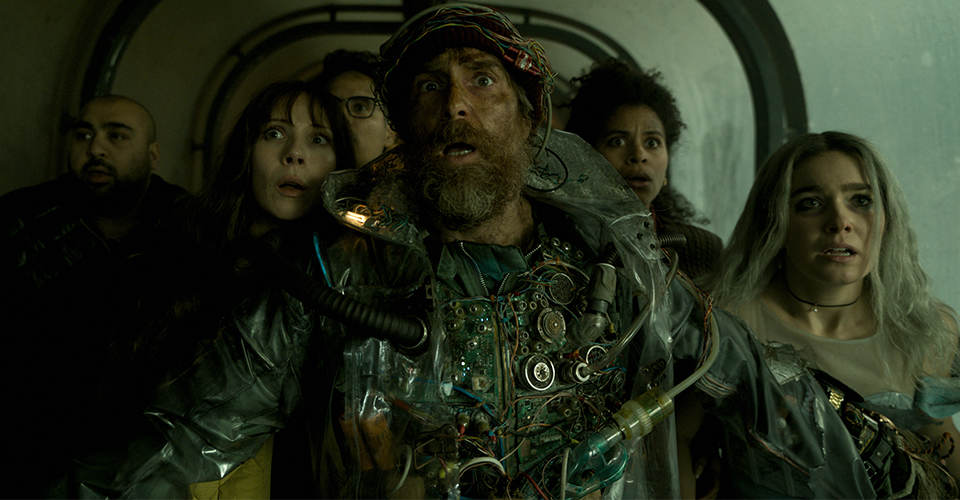
Movies about evil AI taking over the world and the only way to stop it being time travel might sound familiar, and yes, the overall structure of the movie feels a lot like The Terminator. No shade to Arnold Schwarzenegger, but Sam Rockwell makes for a way more compelling figure from the future who is on a mission in the past than any versions of the Terminator. Rockwell is as wacky, charming, and unhinged as you’d expect him to be, and he’s easily the key to keeping this whole story going. Rockwell isn’t alone on his mission, as he’s joined by characters played by Haley Lu Richardson, Michael Peña, Zazie Beetz, and Juno Temple, and while they’re all perfectly fine, their characters are never anything more than necessary cogs in the machine of the movie’s plot to help the story move forward.
As implied by the title, this movie has a bit of a frenzied and chaotic energy, which largely impedes its narrative momentum. While the present story unfolds, we pivot to vignettes about some of these characters experiencing bizarre encounters that led to that night in the diner. From using tech to revive a loved one from the dead to cell phones turning people into zombies to abandoning the real world for virtual reality, the whole first half of the movie feels more like a Black Mirror-esque anthology than a linear narrative. It’s a credit to the impact of that Charlie Brooker-created series and how he captured a certain type of satire of tech that these vignettes in Good Luck, Have Fun, Don’t Die feel so derivative, though it could also be due to how uninspired these vignettes feel.
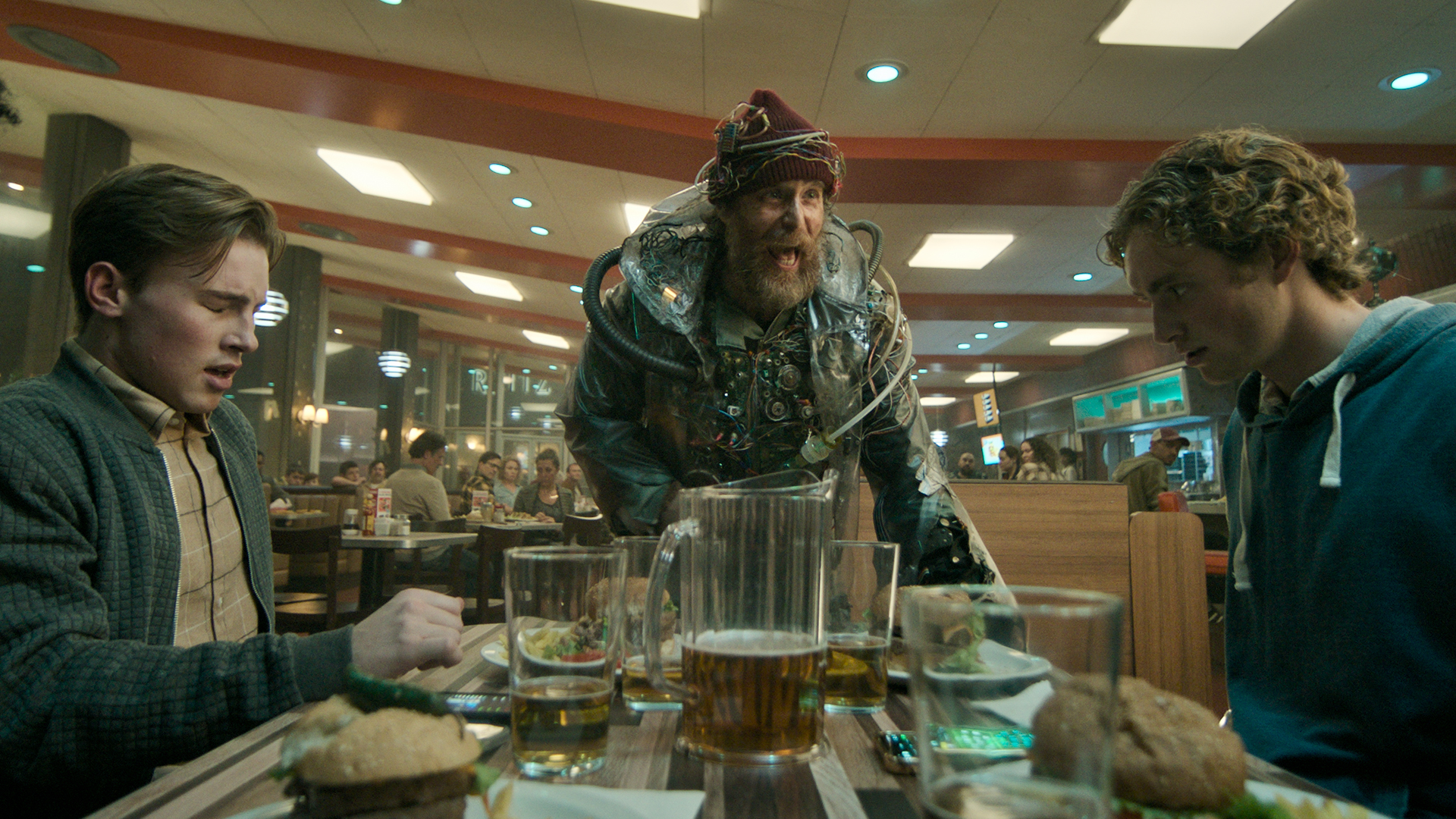
Once the movie gets past this anthological format, it gains some long-awaited narrative urgency, and things get a bit more exciting … for a little while. With a two-hour-and-15-minute run time, the experience just gets exhausting. Like some of Verbinski’s other movies, there are too many ideas and none of them feel fully fleshed out. Had we gotten the narrative to focus a bit by cutting some of these ideas for a tighter experience that was under two hours, the movie still wouldn’t have been revolutionary, but it wouldn’t have been so laborious for the viewer.
Even though the movie is largely a mess, filled with a handful of promising performances, sequences, and ideas, what helps make the journey a bit more admirable is Verbinski’s more definitive critique of AI. With each passing day, AI becomes a more common part of our everyday lives, impacting a variety of people in numerous industries. Movies like The Terminator or The Matrix served as nebulous critiques on our reliance on technology and escapism, which came at a time in humanity when it all felt like fiction. More recently, the last two Mission: Impossible movies made an ambiguous, all-powerful “Entity” serve as its villain, with some viewers claiming this was an allegory for the importance of movies being made by humans as opposed to algorithms. Towards the end of Good Luck, Have Fun, Don’t Die, Rockwell’s character goes on a tirade about AI being the death of humanity, and with it being delivered in voiceover, it feels less like something his character is saying and more like Verbinski speaking directly to the audience about how AI, in all its forms, is coming for us to take our jobs, minds, and everything that makes us humans, in all of our flaws.
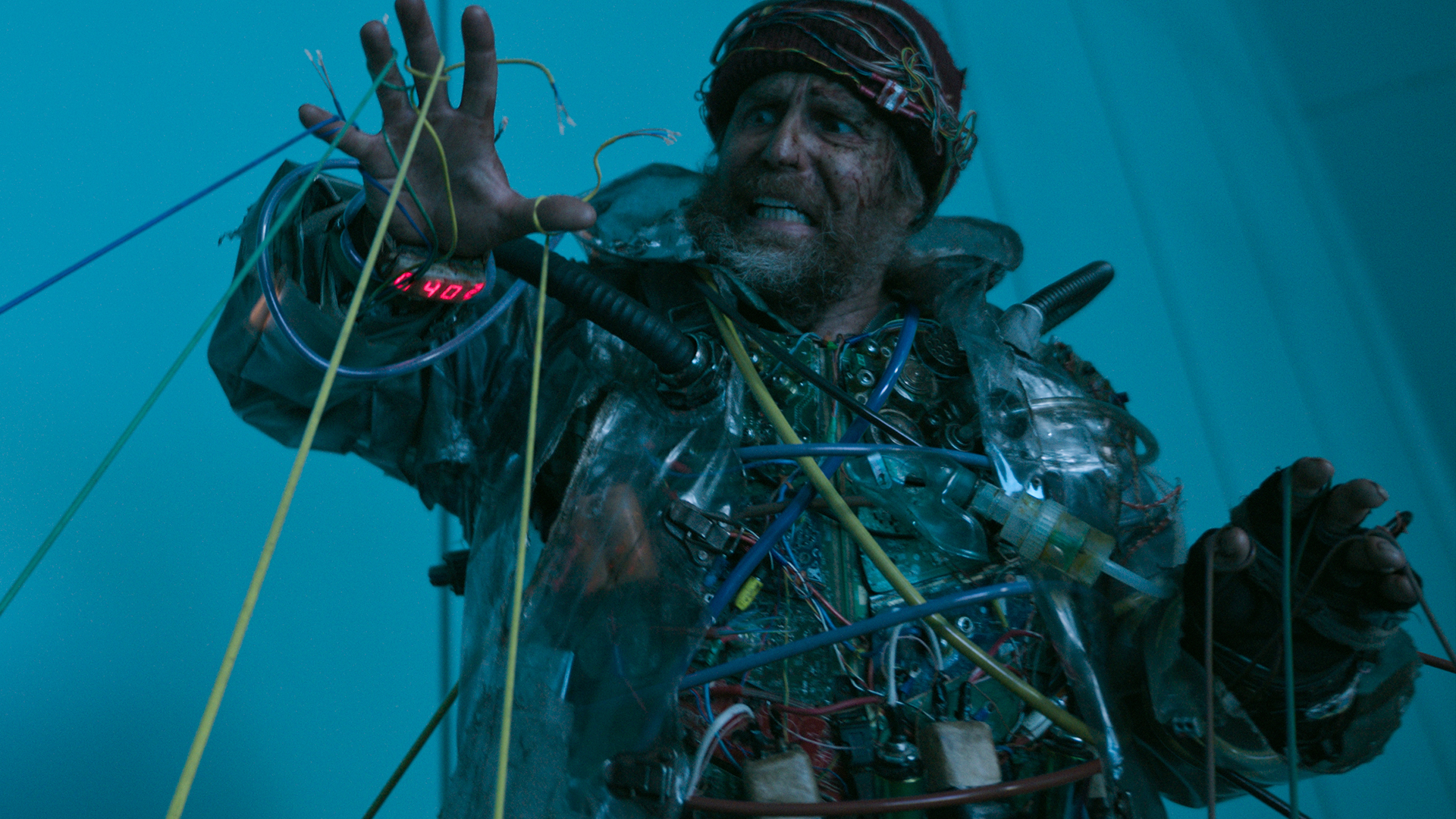
Good Luck, Have Fun, Don’t Die doesn’t entirely work, but it directly criticizes the ways in which society is shifting towards using AI and algorithms and tech to replace humans in every way that might be more cost-efficient. In this sense, even if its message is more effective than the movie itself, I’d rather watch a flawed movie that’s jam-packed with ideas that came from a human and stars humans than a movie designed by a committee to appeal to the widest audience possible. Still, if my reaction to the movie feels like you’d have just as much fun watching the trailer for this movie a few times instead of actually committing to watching the whole thing, well, you’re right!
Wolfman Moon Scale

 The Wolfman Cometh