
Many moons ago, I used this very blog to confirm that Paul Thomas Anderson was one of my favorite directors. While I don’t entirely disagree with that assessment, in the years since that claim, the filmmaker delivered movies like Inherent Vice, Phantom Thread, and Licorice Pizza, and while all of those films had their merits, none of them resonated with me as strongly as his earlier works. There’s an inherent excitement knowing that Anderson would be delivering a new movie, especially since it enlisted Leonardo DiCaprio, but the marketing campaign for One Battle After Another has been a bit…terrible? Outside of knowing that the movie was filmed for VistaVision, the trailers themselves did little to build excitement about the project, as each trailer and TV spot was just an arbitrary compilation of tonally uneven sequences. Luckily, the discombobulated marketing campaign helped temper expectations, allowing One Battle After Another to shine on its own merits, making for a hilarious, riveting, and overall wackadoo experience.
“Ghetto Pat” (DiCaprio) and “Perfidia Beverly Hills” (Teyana Taylor) meet as members of the political revolutionary group the French 75, committing political crimes as an act of protest. Becoming parents sees Pat slow down his activism, only for Perfidia to become more empowered. When these actions cause Perfidia to separate from her family, Pat assumes the new identity “Bob” and is left to raise their daughter. 15 years later, now-teenage Willa (Chase Infiniti) believes her father to be delusional and paranoid, only for Col. Steven J. Lockjaw (Sean Penn), a figure from Pat and Perfidia’s past, to catch up with Willa, forcing Bob to tap into his former self to track down Willa at all costs.
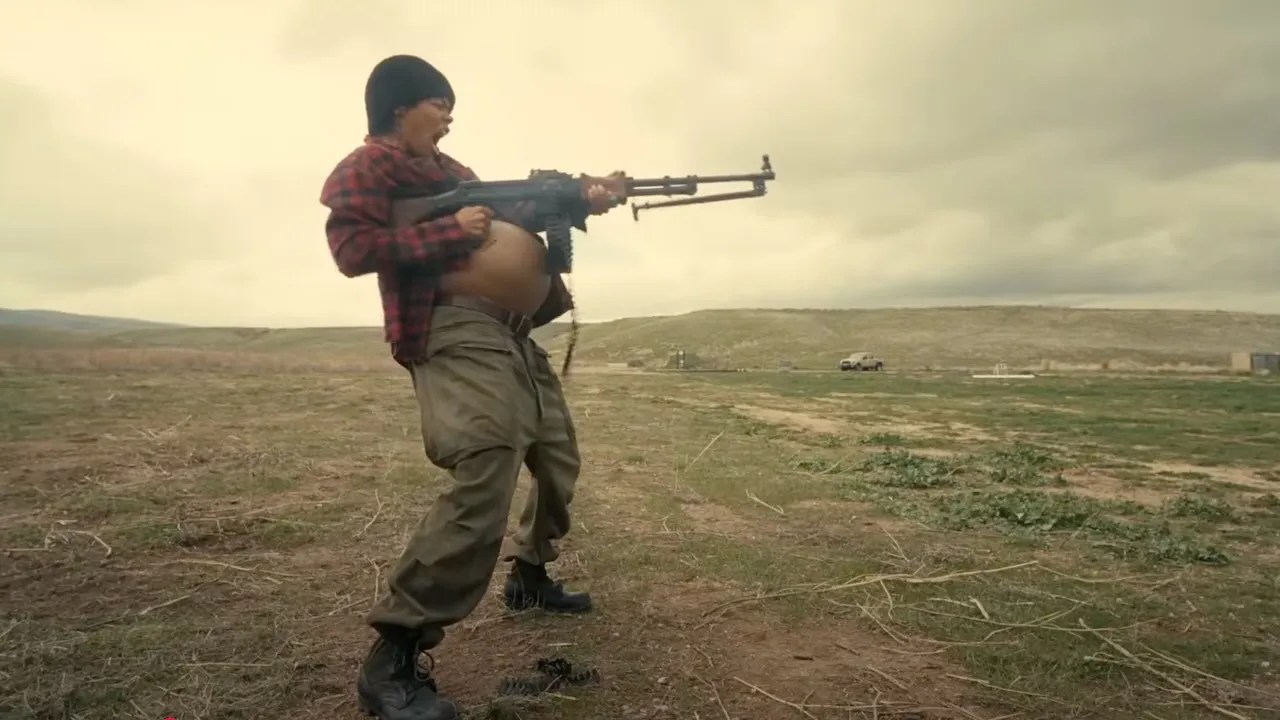
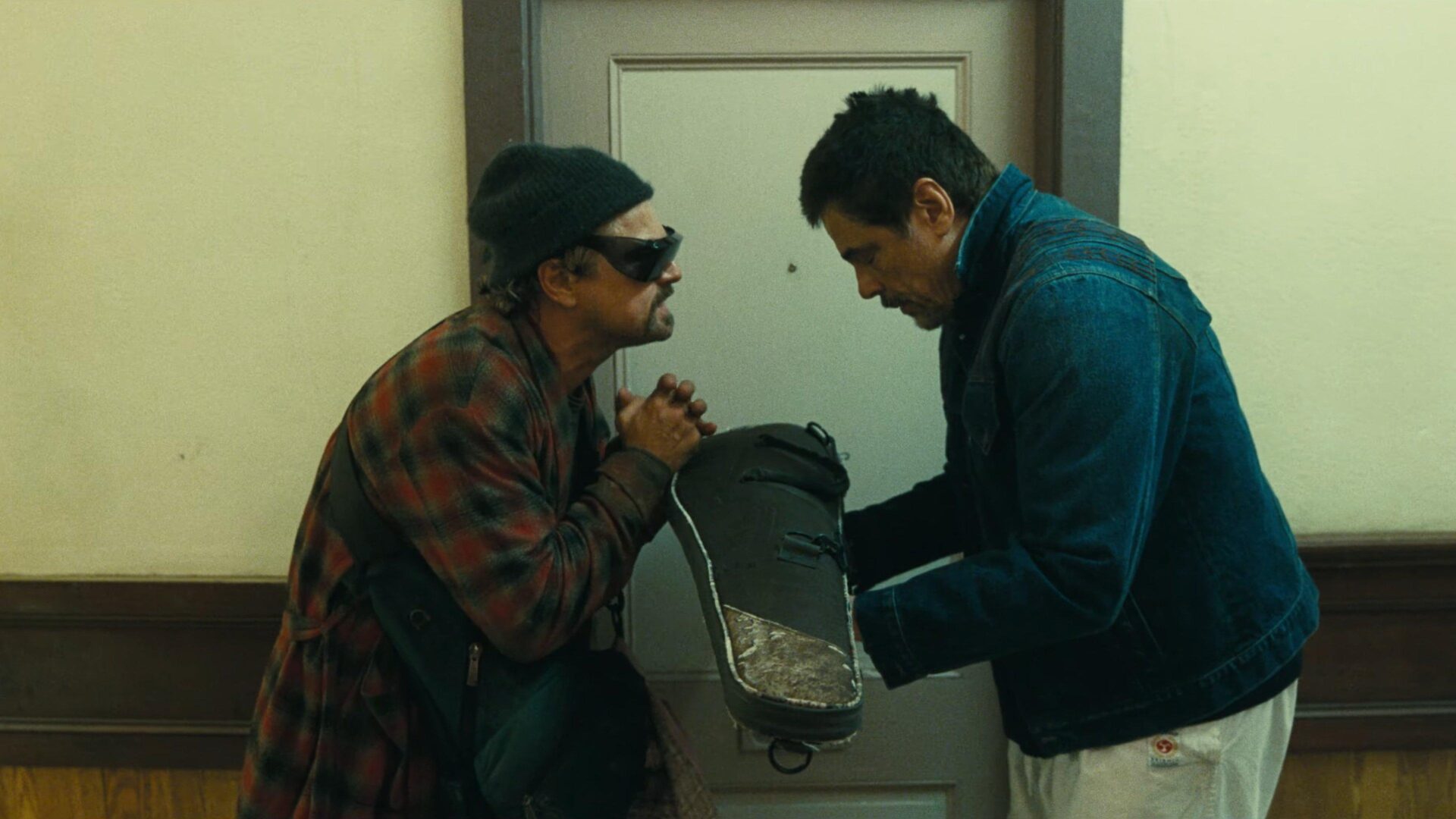
Having seen the film, I have a better understanding of how difficult this project has been to market. Sure, marketing teams could try to get the point across that this is a political action-thriller that’s also a pitch-black comedy, but why do that when you can just show scenes of DiCaprio calling Benicio del Toro “sensei” while also shouting, “Viva la revolución!”? In that sense, the ambiguous marketing campaign accurately reflects what a cinematic melting pot this movie really is. Rather than try to give a viewer any sense of what to expect, the marketing just lets the movie and its 162-minute runtime speak for itself. For those who don’t like ambiguity, I’ll say the movie is like if Taken and The Big Lebowski had a baby that grew up watching Eddington.
Every single actor in this movie is fantastic, which shouldn’t come as a surprise to anyone who’s ever seen DiCaprio, del Toro, Penn, or Regina King in anything else. The real surprises, though, are Taylor, who electrifies the screen every moment she’s in a scene, and Infiniti, who holds her own against some Hollywood heavyweights. Anderson understandably could have all of Hollywood at his disposal, and while a majority of the movie rests on DiCaprio’s shoulders, the lesser-known Taylor and Infiniti feel like complete discoveries, and by making for compelling foils against established acting powerhouses, the whole ensemble feels elevated and reminds audiences of Anderson’s dynamic casting decisions.
Between movies like Boogie Nights, Magnolia, There Will Be Blood, and Inherent Vice, it’s really hard to limit Anderson to any one cinematic realm. From a period piece about the porn industry to historical dramas, Anderson has dipped his toes into a variety of genres, with the unpredictable nature of One Battle After Another only furthering the filmmaker’s reputation for zigging when you expect him to zag. One Battle After Another is easily his most action-forward experience, with audiences understandably having doubts about how the director, who leans into compelling performances more than showy direction, would handle such set pieces. The movie might not depict the chaos seen in movies like John Wick or Heat, though Anderson manages to make even the most restrained of escape sequences or high-speed chases feel thrilling without having to deliver breathtaking spectacle. Even without tremendous bombast, the stakes of the drama and the economical direction of such sequences elevate them to feel more intense than what’s seen in action contemporaries.
Immediately after watching One Battle After Another, I was trying to recall my favorite scenes or the ones that stood out most in my memory. As silly as it might sound, what I ultimately realized is what makes this movie so satisfying, along with much of Anderson’s filmography, is that every single scene in the movie is, well, a good scene. Whether it’s Bob interrogating Willa about who she’s going out with that night to del Toro’s Sergio coordinating an escape for illegal immigrants he’s helping protect to tense encounters between Lockjaw and anyone he shares the screen with to underground meetings of white supremacist groups, every single scene is enthralling. In previous films, these sequences come together piecemeal and can be enjoyed isolated from context, while One Battle After Another intertwines all of these sequences to lead to a satisfying crescendo. Anderson might be celebrated for the dynamic ensembles he puts together (just read a little earlier, even I did that!), but he also deserves credit for being a dynamic storyteller, pivoting from one disparate tone to the next with each scene.

I know I’m tossing a lot of praise at One Battle After Another, and it’s all deserved, and while I can’t point out any one thing that might hold the movie back from me personally thinking it’s a masterpiece, I ultimately can’t call it that due to the inherent nature of the premise itself. Movies like Boogie Nights, Magnolia, and There Will Be Blood are all movies I’d call perfect and are ones that I could watch on an endless loop, but my own personal storytelling preferences are what prevented me from being fully engaged. If anything, it’s a testament to Anderson’s abilities that I’d typically avoid political action-thrillers, but he managed to fully win me over with this one.
One Battle After Another only furthers the unpredictable reputation of Anderson as a filmmaker, solidifying his skills as a conductor who manages to bring together the orchestra of a great script while getting exactly what he needs out of his immensely talented cast, and also keeps audiences on their toes by delivering scene after surprising scene on his way to a satisfying payoff.
Wolfman Moon Scale

 The Wolfman Cometh