
I never saw The Martian in theaters, but I sure have seen it a bunch of times on airplanes. Based on Andy Weir‘s novel, the movie is endlessly watchable, as it’s a constantly entertaining mix of science and humor (maybe not enough to be nominated for a Golden Globe for Best Comedy or Musical, but still pretty silly). Initial looks at Project Hail Mary, also adapted from a Weir novel, didn’t excite me at first, but if it was going to be anything like The Martian, I knew I’d have a blast! To my dismay, however, it’s very much like The Martian, and virtually every other good sci-fi movie from the last 15 years. If you’re looking for a movie with some laughs and some thrills in deep space, then Project Hail Mary fully delivers, but if you’re looking for something that doesn’t feel like an amalgam of a dozen other better movies, then you’re out of luck.
Deep in space, Ryland Grace (Ryan Gosling) wakes up from some type of intergalactic slumber, unsure of where he is or why he’s there. He’s ultimately able to piece clues together to determine that he is the only survivor of a mission on a quest to find out why our Sun is dying by traveling to the only other star in the galaxy that isn’t also “infected” by what’s diminishing our own Sun. Turns out, though, that he’s not the only one on a mission, as he collides with another otherworldly traveler on another ship, as the pair unite to try to save both of their planets.
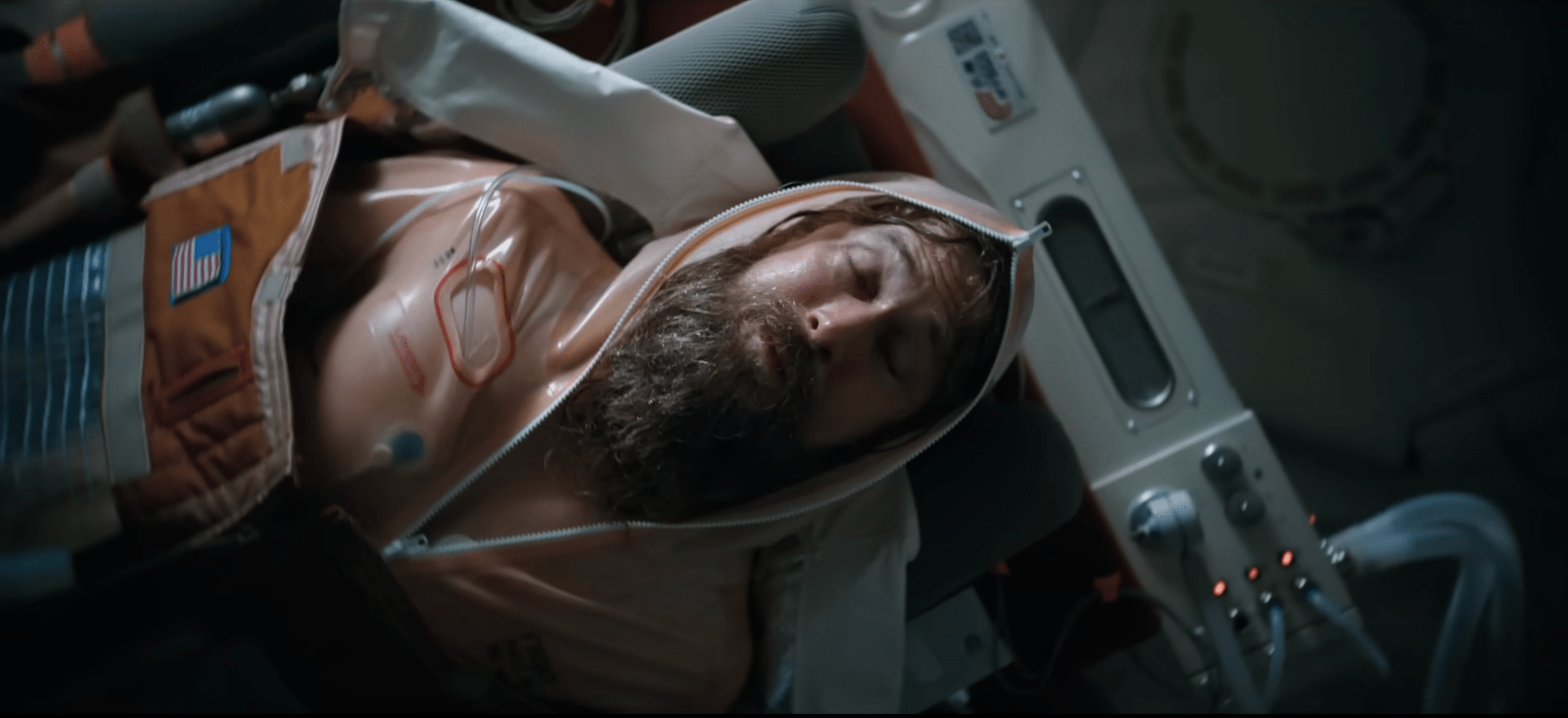
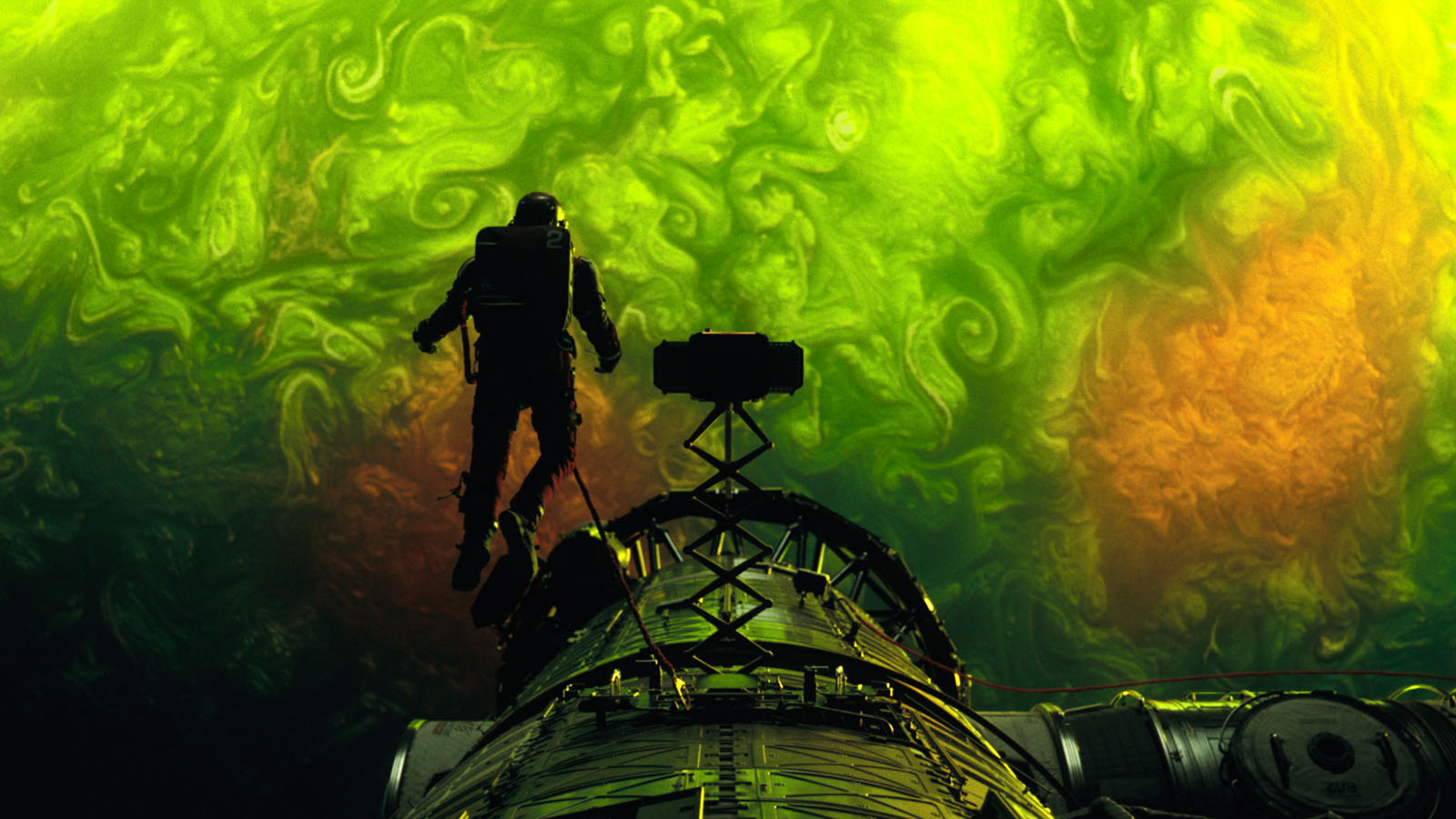
It’s hard not to be engaged by the core concept of the movie, especially as someone who is such a big fan of Danny Boyle and Alex Garland’s Sunshine. While both of those figures are known as some of the more ambitious storytellers of their generation, especially in the genre world, it makes sense they’d deliver such a compelling take on the premise. I’ve been a big fan of Project Hail Mary directors Phil Lord and Chris Miller, though their The LEGO Movie and 21 Jump Street films have an inherent, intentionally silliness to them. Project Hail Mary doesn’t feature the meta-textual comedy of those experiences, but it sure is packed with jokes. It’s ultimately this reliance on humor and the pair’s failure to balance the gravitas of this narrative with that humor that prevents the movie from being anything exceptional. The pair almost delivered a sci-fi outing with Solo: A Star Wars Story, only for them to exit over creative differences, and there’s no part of the visual splendor that this movie delivers that hasn’t been seen before.
I’m a big fan of Gosling’s work (possibly because we are often mistaken for one another), so knowing he was essentially taking the Matt Damon role from The Martian made me optimistic. Instead, we’re given less of a character in Ryland Grace and more “Ryan Gosling: The Scientist,” with everything the character says and does having the same attitude as when the actor hosts Saturday Night Live. Virtually every single line of dialogue feels like a quirky quip as opposed to anything anyone would actually say in the situation, with the inevitable end of the known galaxy and all human life being treated as flippantly as Ken breaking up with Barbie. Sure, other performers tasked with a similar role wouldn’t be able to pull off what Gosling does, so the fact that he can keep you engaged for 2.5 hours is still impressive. There’s a difference, though, between keeping you engaged and getting you to care.
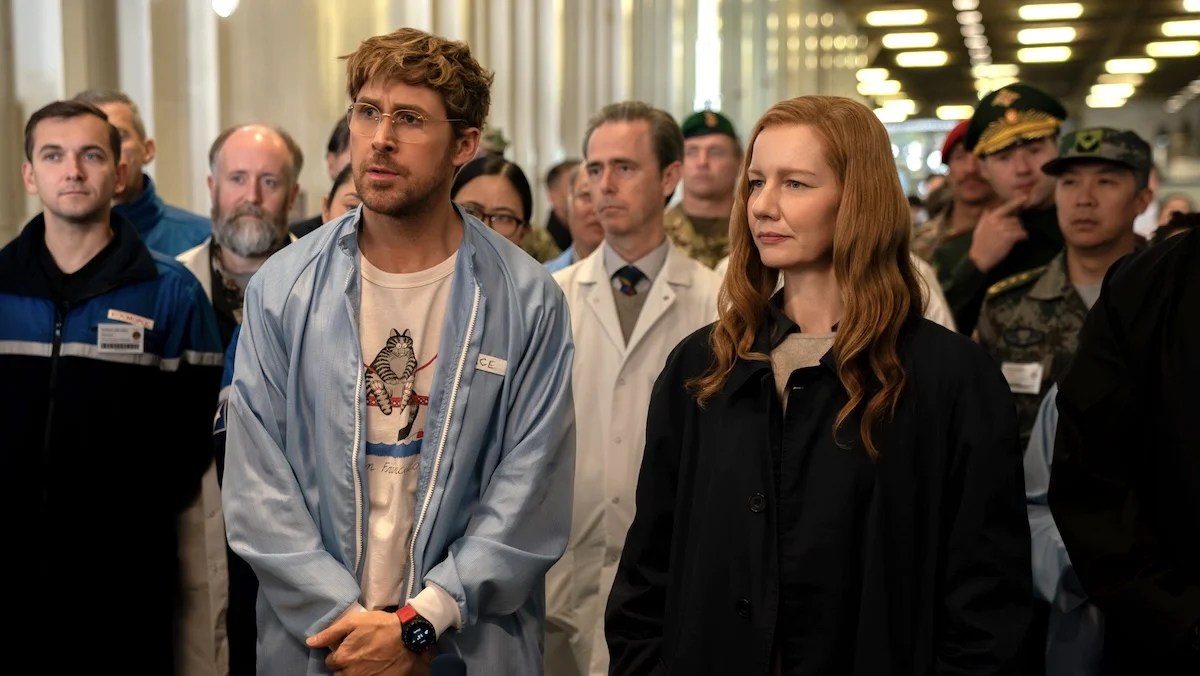
Not all novels are adapted equally (just look at the dozens of dud Stephen King adaptations out there), but with Drew Goddard having adapted The Martian and also adapting Project Hail Mary, I had more confidence in this second outing with Weir’s work. Having not read the book (I can barely read blog posts!), I can’t really say how closely it mirrors that novel and the way events unfolded. The movie, though, unfolds with Ryland’s time in space being depicted linearly, with those events intercut with flashbacks that explain what led to this point. In the past on Earth, Ryland is working under the supervision of Eva Stratt (Sandra Hüller), with these “wow, how are we gonna pull off this mission?!” scenes being some of the movie’s most effective. However, Eva is written and performed as a cold and distant figure, which prevents Ryland from developing a relationship with her and with, well, anyone. Part of the reason he ended up on this mission was that he had no connections or relationships on Earth, so compared to the weight of a movie like Interstellar, Project Hail Mary doesn’t feel like it has emotional stakes.
The concept of “hard sci-fi” isn’t something new, but it’s been earning more attention in recent years as audiences engage more with it. For those unfamiliar, hard sci-fi is a genre in which there’s a heavier emphasis on the science of how the fiction can unfold and inherently doesn’t require as many leaps in logic. This emphasis on science also often means the tone leans a bit more serious than traditional sci-fi, despite there not being strict criteria of what is deemed “hard sci-fi.” Some of my own personal favorite hard sci-fi movies would be Moon, Arrival, Contact, and Ad Astra, along with the aforementioned The Martian, Sunshine, and Interstellar. Project Hail Mary just feels like it’s picking and choosing various sequences from all of those movies as opposed to having much of its own identity. While it feels like it’s attempting to be hard sci-fi, by feeling so derivative of better examples, it never authentically feels like it earns that description, and is instead “soft sci-fi” (which isn’t even really an actual phrase), but I’d describe it as something focusing on lighthearted entertainment or spectacle. The harder it tries to feel like The Martian, the more the whole thing just feels like Armageddon.
There was some debate ahead of Project Hail Mary about its lengthy run time, and while its actual run time of 2.5 hours is lower than what was previously reported, viewers will definitely go on to feel that length. Still, Gosling does manage to keep us engaged and excited in the narrative, even though it doesn’t bring anything that feels all that fresh to the table. Tonally and structurally, the film feels a bit messy, as if it’s just a collection of scenes and sequences as opposed to having much of an emotional throughline. Taken on their own, each sequence is a delight, but strung together, Project Hail Mary just feels like a weightless derivative of far more exciting sci-fi outings. Luckily, First Man still exists, so anyone craving a hard sci-fi tale of Gosling in space can still enjoy that experience.
Wolfman Moon Scale

 The Wolfman Cometh