
David Lowery‘s first movie might not have been A Ghost Story, but it’s safe to say that it’s the movie that really put him on the map. The narrative lived up to the title, as we were given a story with ghosts, and many scenes featured sheet-wearing apparitions that, at least in the marketing materials, conveyed that it would be a full-blown horror story. Instead, we got a much more contemplative meditation on death, grief, and the passing of time, which made good on the promise of ghosts wearing sheets. Point is, Lowery has always been a filmmaker who takes the path less expected, especially given how movies like The Green Knight, Peter Pan & Wendy, and Pete’s Dragon were based on established properties but circumvented expectations. I always root for Lowery, even if the idea of his Mother Mary and its exploration of a pop star’s psychological breakdown didn’t immediately appeal to me. With undeniably impressive performances and a handful of powerful sequences, Lowery may have gotten a bit too lost in the sauce for his latest to be entirely effective.
Mother Mary (Anne Hathaway) is one of the biggest, if not the biggest, pop star in the world. On the eve of a major performance, something overcomes her and, despite having all of the most talented costume designers at her disposal, she flies unannounced to the home of her former collaborator, Sam (Michaela Cole), in hopes of getting her to make a dress for the significant occasion. What starts as what feels like playful irritation eventually unfurls into the revelation that Sam felt abandoned and betrayed by Mother Mary in her quest for stardom. Over the course of one dark and stormy night in a barn in the countryside, the pair reveal to one another the personal, emotional, and possibly literal demons and ghosts they’ve been struggling with in the time since they last worked together, in an attempt to exorcise the negativity.
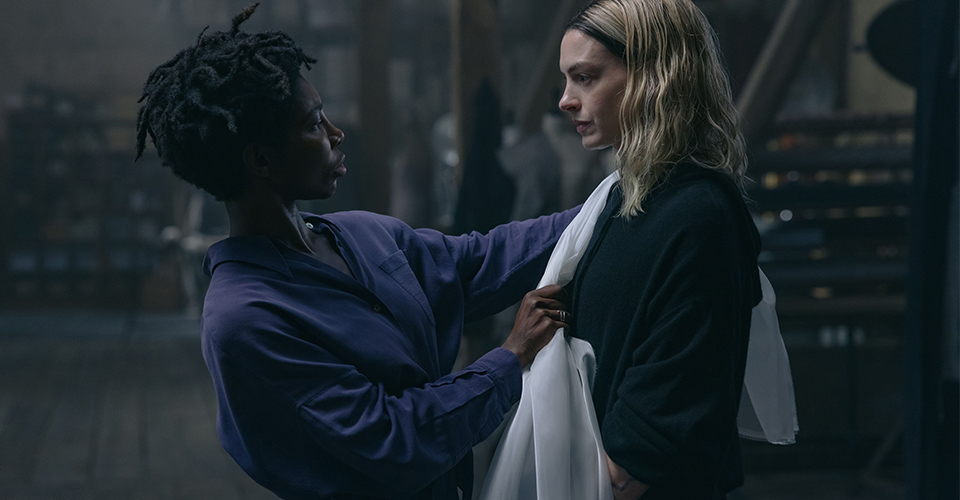
Now, keeping in mind that I’m a total moron, I’d like to confirm that there are metaphors in this movie. There’s the more obvious metaphor about being haunted by the loss of a friend (though there are underlying vibes that imply Mary and Sam had much more than a platonic relationship, depending on how each viewer reads the situation), which someone as dumb as me could understand. There’s plenty more that’s hinted at in the narrative and what these ghosts represent, from depression and anxiety to trauma to the challenges of an artist attempting to remain true to themselves while also attempting to be marketable. As someone who is not an artist, when I start getting a whiff of stories about how “being an artist is very hard,” I check out, so the parts of Mother Mary I disconnected from were those sequences. You, however, might appreciate such metaphors because you’re an artist and you feel tortured, and that’s just great.
There are some components of Mother Mary that I feel are absolute successes, but where the film faltered with me was in its layering of these various metaphors. I can relate to relationships of all kinds falling apart and how they occupy a space in you that feels like a ghost, sometimes manifesting in actual pain or an altered mental state where you dissociate and can’t tell the difference between reality and your imagination. I think everyone can! Once the movie’s metaphors start tipping into other realms, though, things feel a bit too vague, obtuse, or unrelatable to really resonate with me.
Speaking to those undeniable successes, Hathaway and Cole’s performances are both phenomenal. Almost the entire movie unfolds in one setting, with one of if not both of them being on screen for almost the entirety of the film’s run time, delivering transfixing dialogue or conveying their internal anguish with both overt and subtle physicalities. I don’t think I’ve ever seen a Hathaway performance I didn’t like, so getting to see her go all-in on a horror movie is a delight. I’m not nearly as familiar with Cole’s work as I should be, but she’s transcendent here, no matter how complex or convoluted the dialogue she’s tasked with delivering might be.
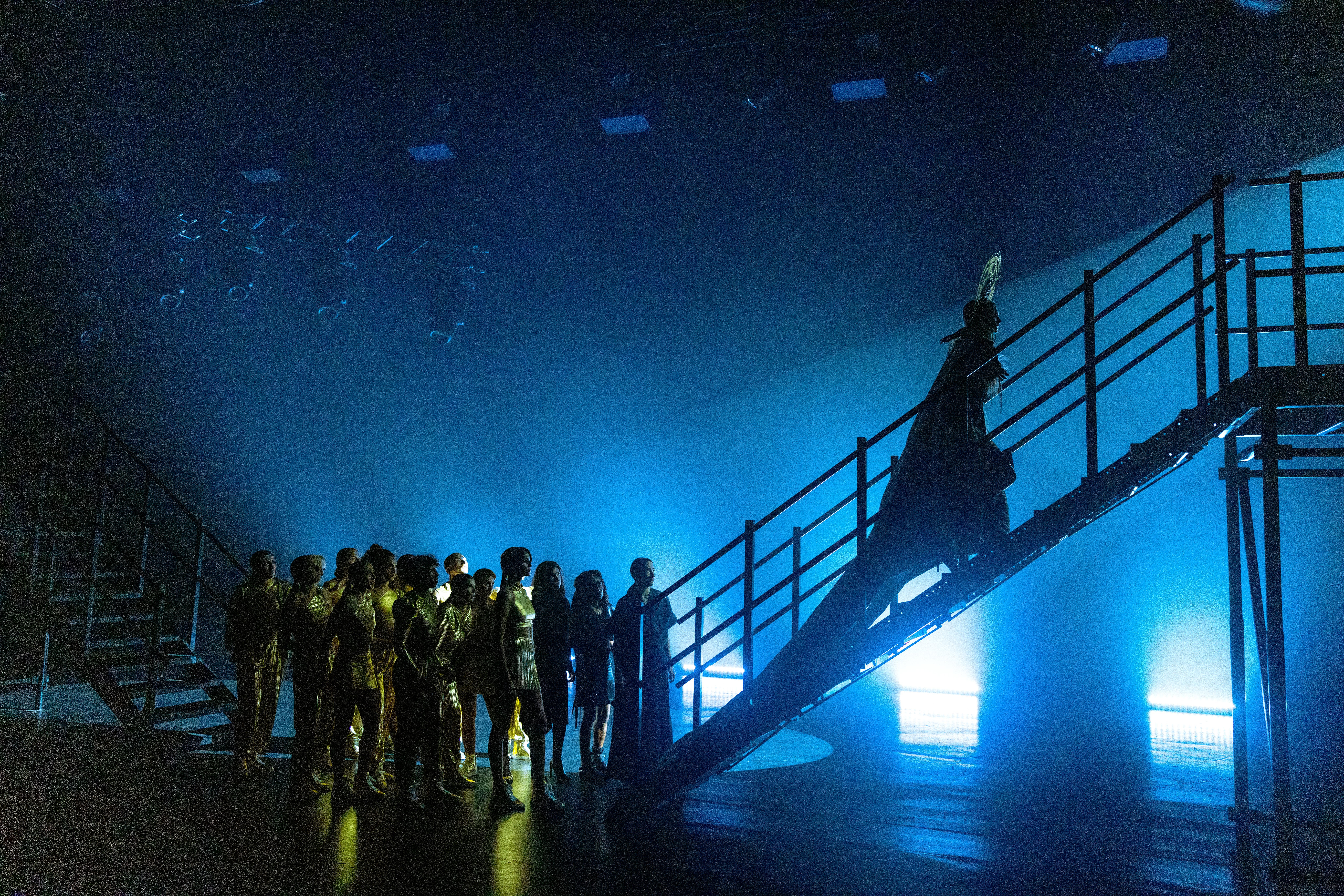
Lowery might have lost the thread (or I guess I lost the thread?) with the script, but his staging of the movie is as effective as you’d expect. Not only do Mary and Sam have this cat-and-mouse game of exploring the barn, exchanging status with one another based on the conversation, but he also pivots to using vignettes within the barn to revisit scenes from the past. Rather than cutting to Mary on stage or in a hotel or Sam in her bedroom, our characters walk to a corner of the barn, which then opens up into a tableau where the characters watch themselves in the past. In this sense, I could see Mother Mary working just as well, if not better, as a stage play than as a feature film. There are some more hypnotic and ethereal elements of the movie, which work adequately as intended, though don’t quite reach the same heights as similar sequences in Lowery’s previous movies.
Mother Mary is a strong example of how a viewer’s mileage will vary, depending on how many of the metaphorical themes are ones you can relate to. Some of the sequences hit me viscerally in ways other horror movies or traditional dramas have failed to, while other sequences failed to impact me in any capacity. The performances are great and the direction is strong, so there’s nothing about the movie that feels like it’s a miss, just don’t be surprised if you don’t personally find yourself moved by the experience.
Wolfman Moon Scale


