
Wait, you’re trying to tell me the guy who wrote Odyssey was named HOMER? Like, Homer SIMPSON? Now I’ve heard everything! Okay, but seriously, I know I read Odyssey (or maybe parts of it?) back in high school or whatever, but I can’t say I’ve ever cared about it in any real sense. Not that I’m coming out here to tell Homer that I could have written a story about a dude who absolutely hates his family and will do anything to not go back home to them better than he could, more that I’ve never had any real affinity for Greek history or its many myths. Remember when that whole “how often do you think about the Roman Empire?” meme was going around? My answer was “never,” so to say my anticipation for Christopher Nolan‘s The Odyssey was low would be, well, accurate. Now having seen it, I can confirm that the movie is exactly what you think it will be, for better or worse.
Odysseus (Matt Damon) leaves Ithaca and his wife Penelope (Anne Hathaway) to fight an unwinnable war on Troy in the name of Agamemnon (Benny Safdie). The warrior uses his wits to hide in a big-ass horse, allowing him to sneak into the city and lay siege to it. The problem? This plan took ten damn years to come up with. Despite the passage of a decade, he takes his sweet-ass time heading back, stopping off for various adventures along the way, which include witches and a Cyclops. Meanwhile, Penelope and her now-adult son Telemachus (Tom Holland) are wondering when Odysseus will come back from “running out to get milk,” while suitors hope to court Penelope. Antinous (Robert Pattinson) becomes the most eligible bachelor, only because he’s the sneakiest and most willing to do whatever it takes to woo Penelope. Will it work? Will Antinous take the throne? Will Odysseus ever return with the goddamn milk? Find out when The Odyssey hits theaters on July 17th!
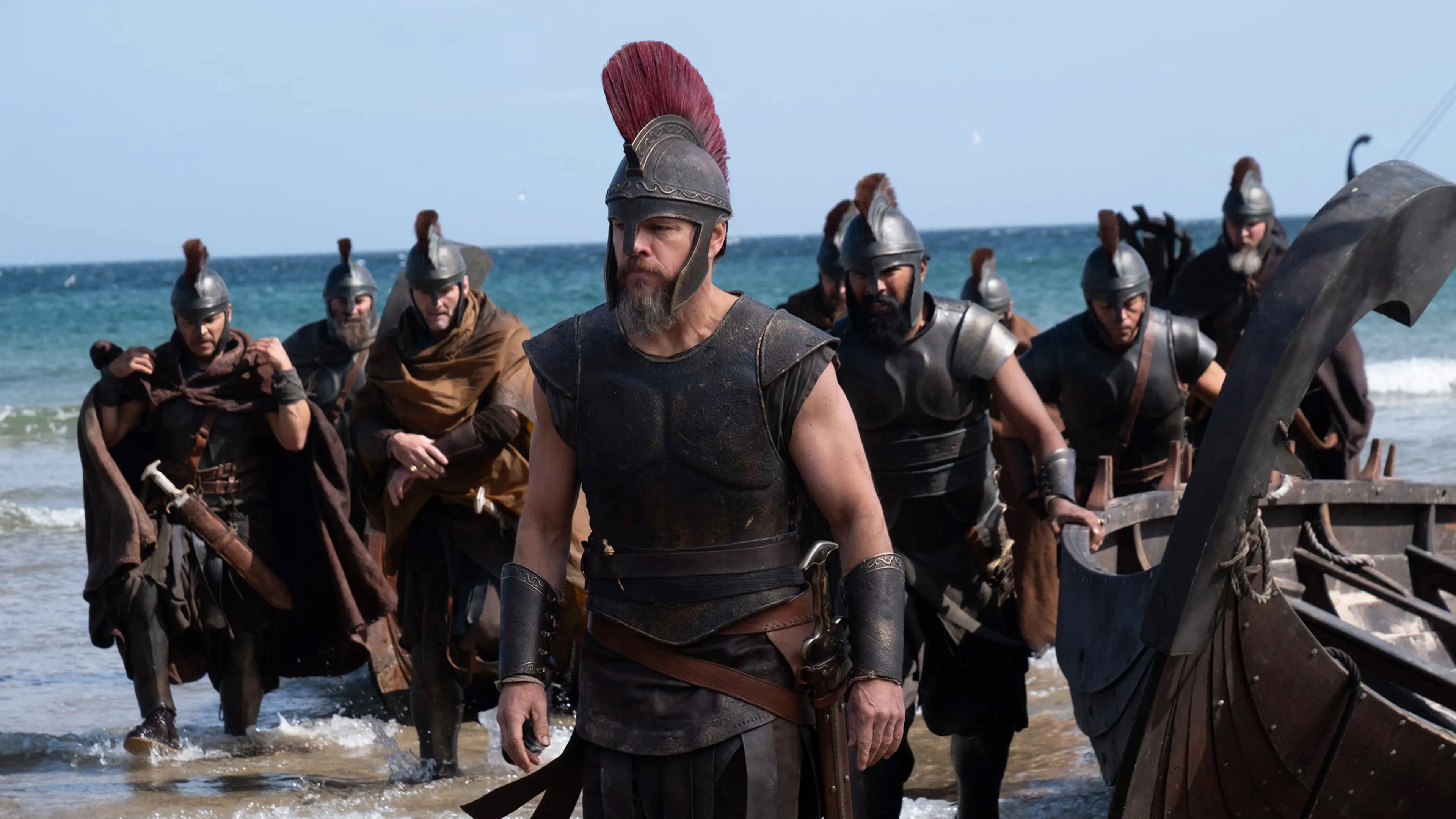
Listen, maybe I got a little silly in that synopsis, but that’s because the trials and tribulations of Odysseus have been well circulated for literally hundreds of years. Nolan understandably wants to honor the source material and not put his own spin on the concept, but while watching it, I couldn’t help thinking, “Wow, this is going to be shown in history classes for the next 15 years at least.” Each plot point pans out exactly as you know it will, from the Trojan Horse to Circe (Samantha Morton) turning dudes into pigs to his confrontation with an army of undead soldiers to Calypso (Charlize Theron) refusing to let Odysseus go home. It’s all here, and it’s all in 70mm! This, for me, is the biggest setback, in that having no interest in the story means not being able to invest in the authentic depictions of those events.
Virtually everyone who shows up in a scene is an all-star actor and they all fully “bring it.” Even after all of the above names I listed, this doesn’t include John Leguizamo or Jon Bernthal or Lupita Nyong’o or Mia Goth or Elliot Page or freakin’ Zendaya. I guess if you’re Christopher Nolan, you’re able to bring in some of the best actors available and bring out the best in them. While each performer is fantastic, it has to be Hathaway as a frustrated mother and wife and Pattinson as a sniveling creep who are the standouts. The only thing holding back some of the other actors is that, in a story this dense, they don’t all get much screen time. Still, every performer proves why they are the most sought-after talent imaginable, making the most out of every scene, no matter how brief.
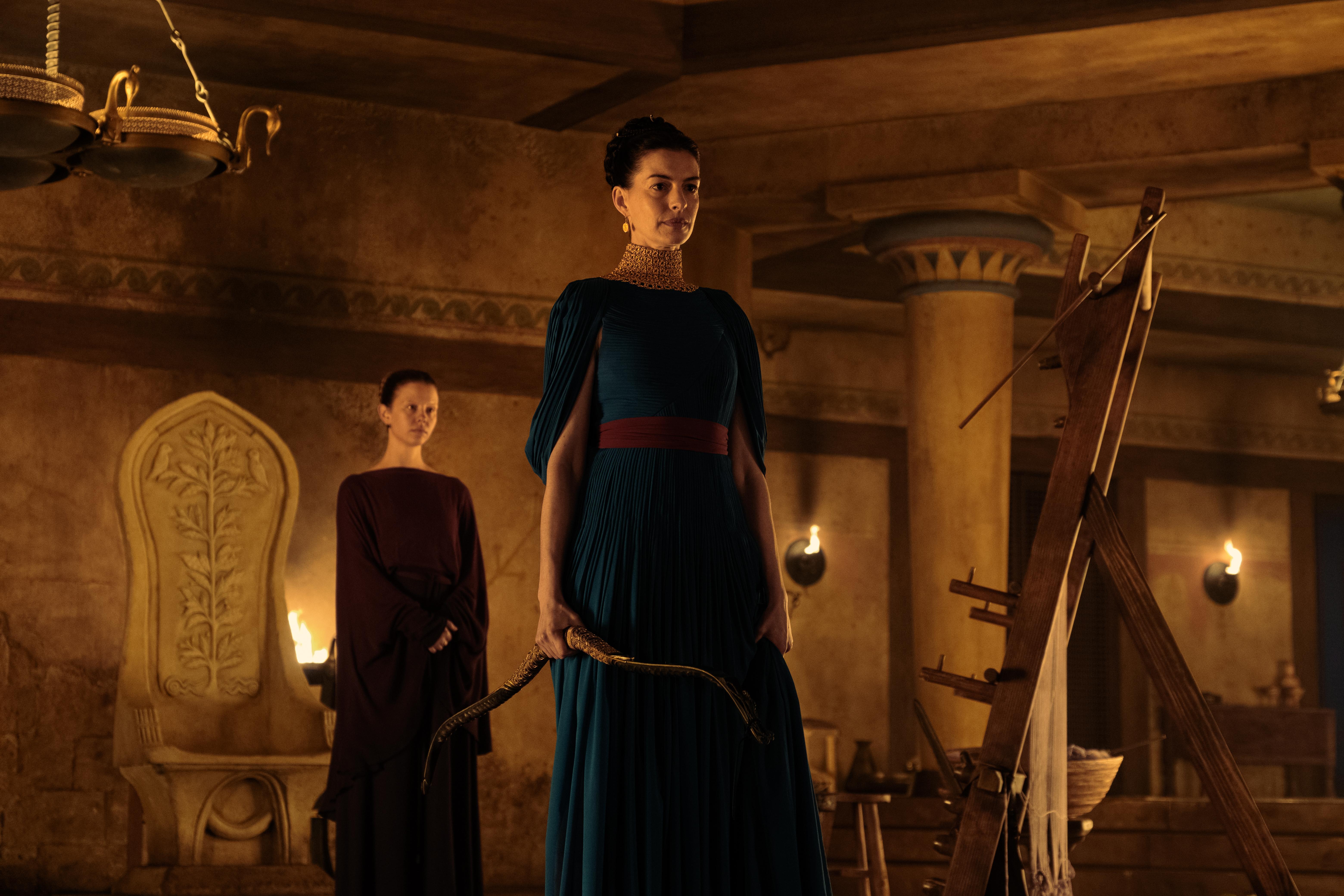
Cinematically, everything Christopher Nolan does in The Odyssey is…fine. The early reviews I heard were so positive regarding the set pieces, and while they are all relatively successful, I’ve seen more impressive set pieces in virtually every single one of his other movies. With him being such a purist, it’s admirable that he did so much of the movie practically, no matter how complicated that could be, though from a directing standpoint, I assume the weight of the IMAX cameras he used to film prevented sequences from being more fluid or dynamic. Everything is happening too quickly to really get a good look at what we’re seeing, while the siege on Troy is shrouded largely in darkness, as is a final showdown between Odysseus and Penelope’s suitors. Admittedly, his more action-forward movies like The Dark Knight trilogy, Tenet, or Dunkirk are more impressive for their scale as opposed to their intricacies or well-choreographed hand-to-hand battles, and as I saw the siege on Troy unfold, I couldn’t help but wish I was watching the Battle of Helm’s Deep from The Lord of the Rings: The Two Towers or virtually any combat scene from Dune or Dune: Part Two. (Sidenote: Christopher Nolan, if you’re reading this, you’re a coward for not showing us a nude Cyclops in all its glory.)
Thematically, on the other hand, Nolan does tackle some interesting themes about war and violence and the profound impact they have on someone. Everyone is familiar with the concept of a Trojan Horse and how it led Odysseus and his men to victory, while this The Odyssey highlights how it’s pretty fucked up to trick someone like that. Ultimately, he was acting on behalf of Agamemnon, and while he thought he was being a good soldier, he failed to question the motivations of his orders until it was too late. While we, the audience, know that Odysseus avoided coming home because he hates being a dad so, so much, within the reality of the movie, he reflects on how having seen the worst of humanity left him forever changed, feeling as though what he once knew as “home” would never exist again. Since I barely know how to read, I can’t say how much this is explored in the original poem, so I can’t really say how much credit Nolan gets for those components. Between The Odyssey and Steven Spielberg’s Disclosure Day, it’s really been the Summer of Empathy. (Though it’s a bit ironic that in the final act of the movie, Odysseus blabs about how sad he is to be a soldier and carry out violence, only to give the requisite beatdown to a room full of his wife’s suitors.)
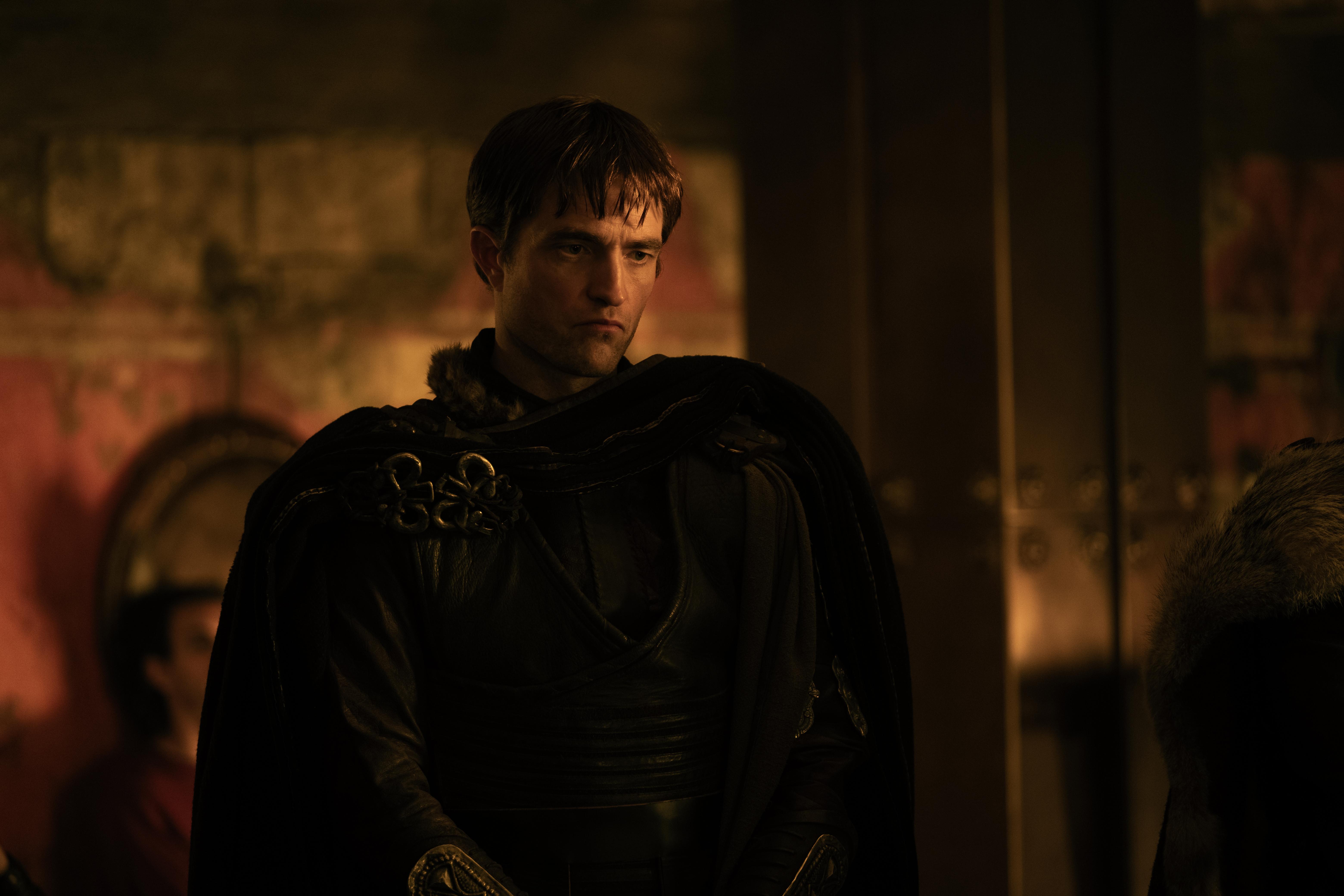
Even if the story itself failed to offer me any surprises and if the filmmaking itself was impressive, if not show-stopping, the biggest success of the whole experience is Ludwig Göransson‘s score. My man knows exactly when to embrace traditional music-making techniques and when to juxtapose what you’re seeing on screen with what you’re hearing. He knows when the music needs to drive the movie’s intensity and when to let the visuals speak for themselves. At this point, I can’t see myself revisiting the movie The Odyssey anytime soon, but I’ll definitely be revisiting the score when I am doing strenuous activities like sitting down at a computer to write about movies.
Much like with Quentin Tarantino or Zack Snyder, it feels like Christopher Nolan has become less of an individual artist and more of a maligned phrase that comes with judgments. For someone to say they’re a “fan” of any of the aforementioned filmmakers, there can immediately be negative connotations associated with them, for one reason or another. With Nolan, his devotion to filmmaking as a craft and the theatrical experience gives him a reputation of being pretentious in certain circles, which is complete horseshit. In an age where everyone is sick of AI slop and straight-to-streaming experiences that are meant to do nothing more than kill time as you scroll on your phone, Nolan is telling one of the biggest stories of all time in the biggest way possible. The Odyssey might not have fully won me over, only because I don’t care all that much about Odysseus and can’t fully understand why it’s “bad” to be drugged and romanced by Charlize Theron for seven years, yet I still admire Nolan’s ambition. That said, given that he’s written entirely original outings like Tenet and Interstellar and Inception, I hope his next project is an all-new mind-bending experience.
Wolfman Moon Scale


Insane review. Loved every detail