
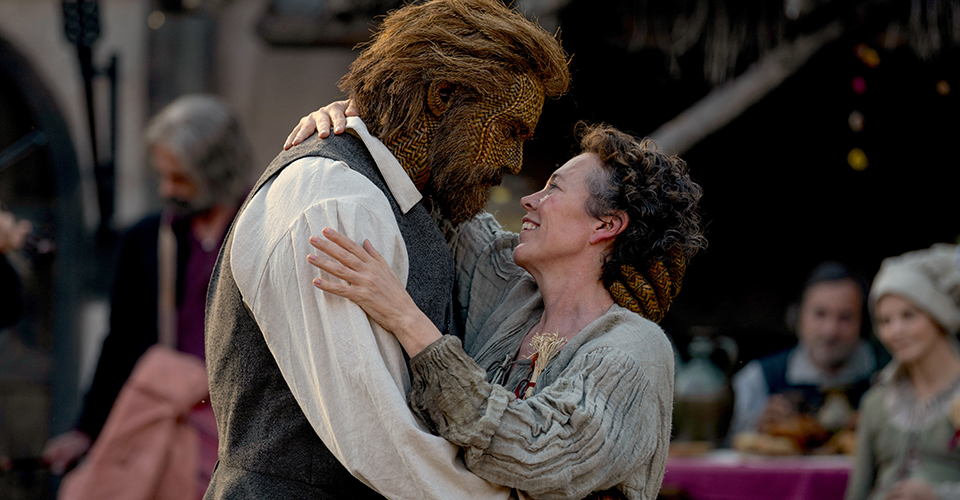
You know what makes me furious? The fact that the Skarsgård clan could fully succeed as a hunky Hollywood family, as one Skarsgård after another could stay rich by playing any type of Handsome Man in any type of film. Instead, they take on ambitious and out-there roles, only to show us time and time again that they are both hunky and talented. Take, for example, Alexander Skarsgård and Wicker, which is only one of the actor’s more sexually charged films of the last year (let’s not forget him in Pillion). This movie trades that film’s leather for, well, wicker, though it is no less touching and insightful once the initial shock value wears off.
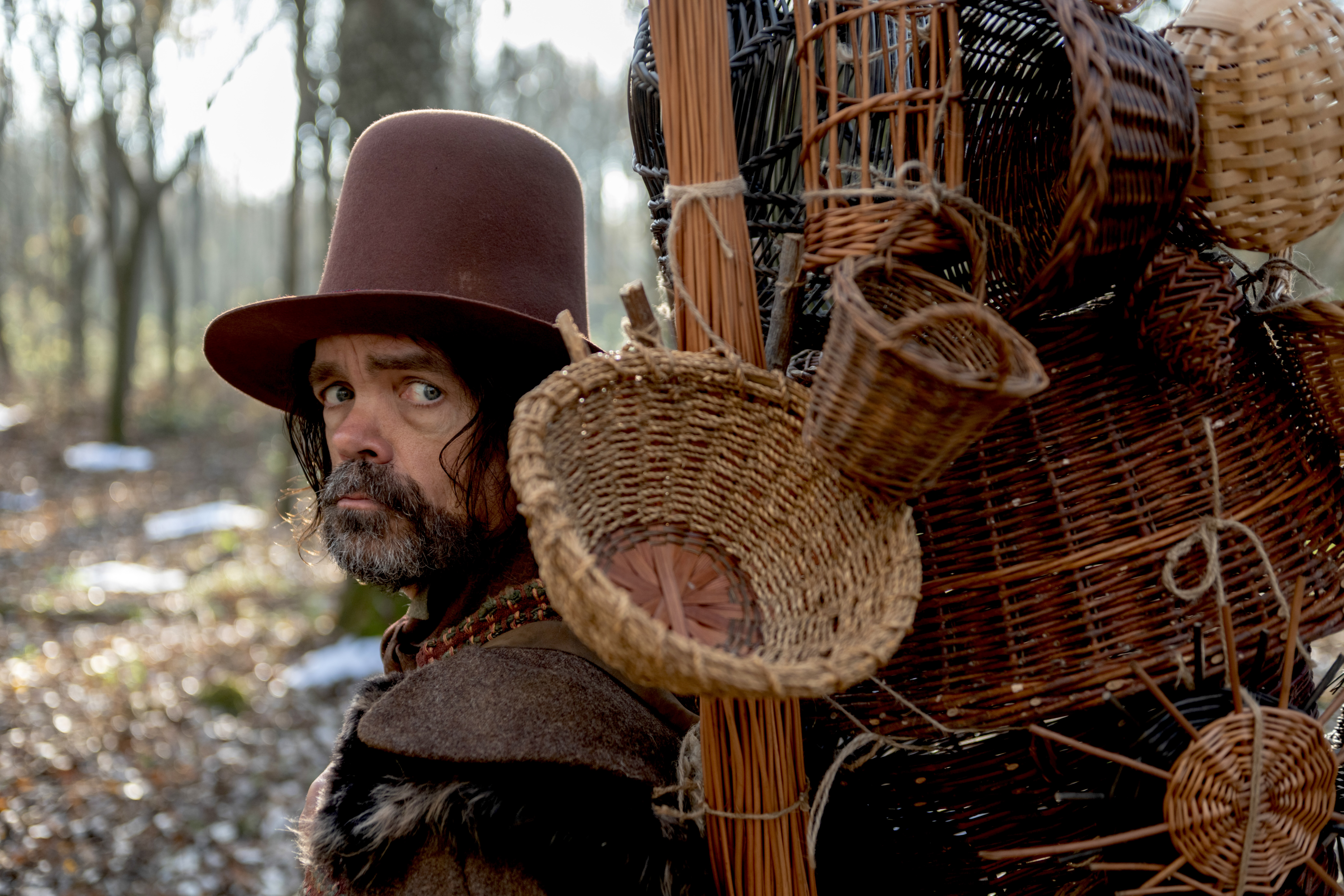
In a small medieval town, it seems everyone has a role and everyone is complemented by someone else who has a role. The Fisherwoman (Olivia Colman), however, spends all her days catching fish, bringing them into town, and tending to her hut. After seeing one wedding too many, she asks the talented Basket Weaver (Peter Dinklage) to make her a husband. He agrees, and the next morning, she meets her Wicker Husband (Skarsgård). Initially somewhat robotic, the Wicker Husband thrives on making his wife happy, whether that be through odd jobs around the house or through sex. Despite this arrangement initially seeming to be everything she wanted, the ridicule of the community gives way to her own paranoia and insecurities about their dynamic.
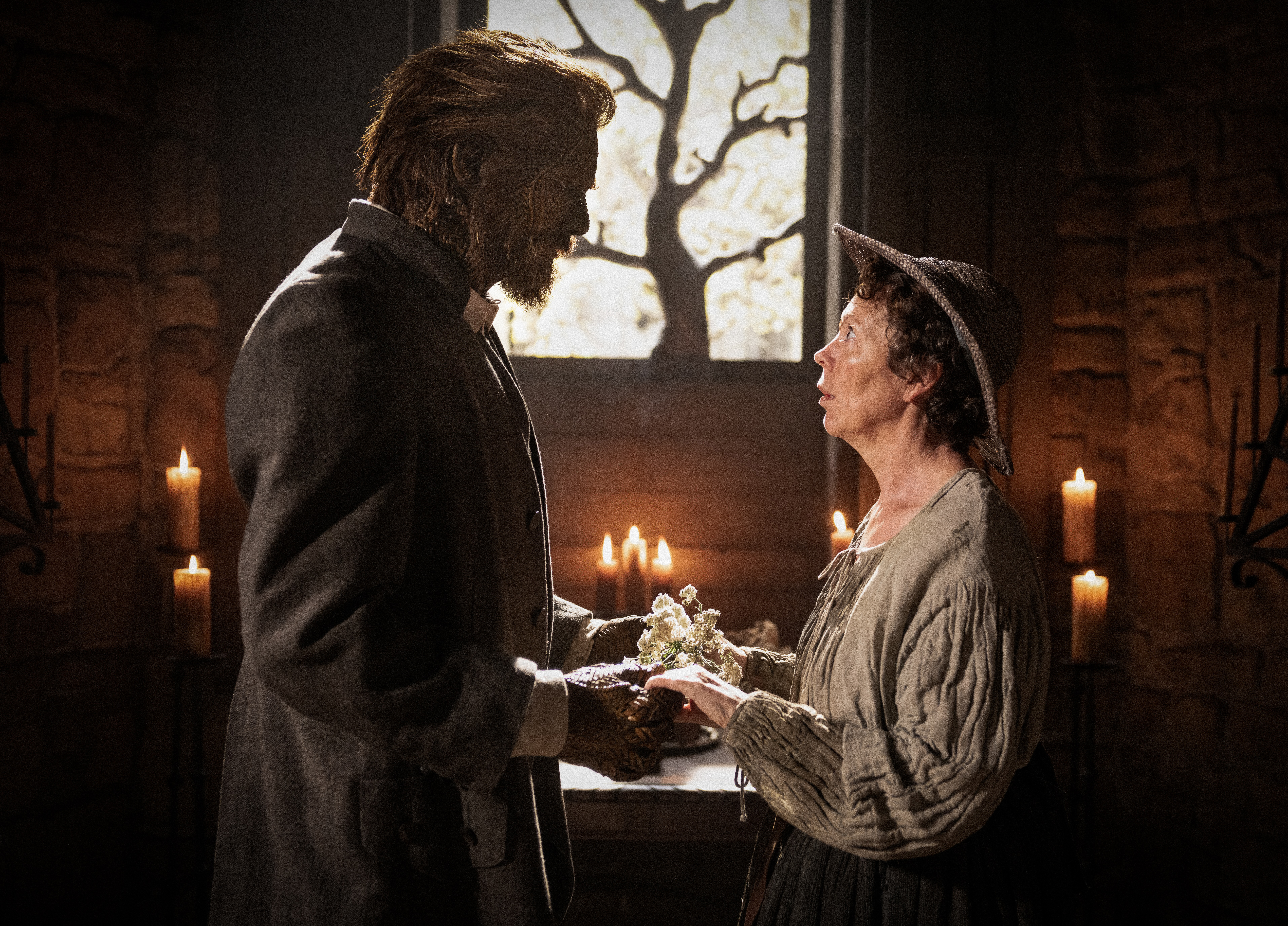
If you’ve seen the trailer for this movie or are even just learning about it now, the initial reaction is probably, “Oh, wow, that sure does sound wacky!” And, you know what? It is! The first act specifically has a number of lighthearted and absurd elements, such as the Fisherwoman asking for a wicker husband and the Basket Weaver immediately saying, “Yup,” as if making sentient beings out of wicker was a regular occurrence (it’s not, everyone thinks it’s weird). Luckily, the movie doesn’t spend its entire run time leaning into that absurdity to evoke the reaction, “Isn’t this all silly?!” The absurdity slowly gives way to something much more thoughtful and poignant.
The cast is what makes this movie work. Colman is tremendous as a figure who uses her outspoken brashness to hide her insecurities and vulnerability about seemingly being doomed to a life of solitude, as she not only smells like fish all day, but also has missed the boat on attracting any of the town’s suitors. Skarsgård’s character is stoic and a (wicker) man of few words, but his body language and the precision with which he delivers his dialogue casues every other character, and the audience, to fully absorb his message. Dinklage is eccentric, but only to the point that he matches the absurdity of everything else around him and only in a way to further establish the parallel universe this movie unfolds in. Elizabeth Debicki, who is first misidentified as Doctor’s Daughter as opposed to her true title of Tailor’s Wife, makes a great instigator who initially tries to keep the peace of the community before realizing she hopes for a disruption in this town. Were it not for such a talented cast, Wicker wouldn’t work, but luckily, it does!
Structurally, the movie resembles virtually any “stranger arrives in a community and their behaviors change the attitude of the whole town” narrative. (For me, I was most reminded of Lars and the Real Girl, likely because they both feature a non-human character as a love interest.) Written and directed by Alex Huston Fischer and Eleanor Wilson, based on the “The Wicker Husband” by Ursula Wills-Jones, Wicker doesn’t attempt to entirely reinvent the similar premise, and instead fully honors all of the anticipated story beats. In this sense, if you enjoy those kinds of movies, then this movie will scratch that itch, but if you’re not interested in them, this won’t win you over.
In regards to not winning you over, I am one of those people who isn’t inherently interested in seeing this premise repeated regularly. Even with such a talented cast, the movie only somewhat kept me engaged by the end of the second act, given how familiar the narrative trajectory felt. Luckily for me (and for the movie), Fischer and Wilson held back on some surprises in the film’s finale that ended up winning me over. The whole movie itself is about insecurity, cultural expectations, and identity, with the final sequences wrapping all those things up together in an overt message to send to the audience. Whoever you are, whoever you love, why on earth would you waste time letting anyone else take away from what you have?
There’s a lot more to this movie than “Alexander Skarsgård is a man made of wood and has sex.” It’s a quirky romantic fantasy comedy, and even if it’s never quite exceptional with any of these components, each of these tones succeeds and amplifies the effectiveness of the other. The filmmakers pulled off the difficult task of making something bizarre and thoughtful and sexy and resonant — and they did it with a Wooden Skarsgård!
Wolfman Moon Scale


